What is Cadasto?
Cadasto is a healthcare data platform built on the openEHR open standard. It provides a set of REST APIs for storing, validating, querying, and managing clinical data in a vendor-neutral, interoperable format.
The foundation for real data availability in healthcare.
What Cadasto provides
Cadasto exposes the openEHR platform services as REST APIs. The platform is organized into distinct services, each handling a specific concern:
- System Service — Discover server capabilities, supported openEHR services, and conformance details. A useful first call for any integration — your application can inspect what is available before making further requests.
- EHR Service — Create and manage Electronic Health Records. Store versioned clinical documents (compositions), organize them in folder structures, and track all changes through contributions with full audit trails.
- Definition Service — Upload and manage openEHR templates and stored queries. Templates define the structure and constraints of your clinical documents — Cadasto validates data against them on every commit.
- Query Service — Execute AQL (Archetype Query Language) queries to retrieve clinical data across EHRs. Supports both ad-hoc and stored queries with parameters. This is the API you use when you need insights rather than individual records — for example, finding all blood-pressure readings above 140 mmHg or generating a report of patients with their latest HbA1c values.
- Demographic Service — Manage the who behind the clinical data: persons, organisations, roles, and party relationships. Demographic data is versioned and separated from clinical content by design — the EHR records what happened, the Demographic Service records who was involved, and the two are linked only through privacy-safe references.
- Admin Service — Privileged operations for system administration, such as deleting or merging EHRs.
- Extra API — Cadasto-specific convenience endpoints for datamaps, episodes of care, terminology helpers, and user information. These endpoints simplify common tasks that would otherwise require multiple openEHR REST calls. Unlike the standard openEHR services above, the Extra API is not part of the openEHR specification and does not follow the same stability lifecycle — interfaces may change between platform releases.
- Authentication — OAuth 2.0 Client Credentials flow for secure machine-to-machine access.
- SMART on openEHR — Implements the SMART App Launch standard adapted for openEHR, handling service discovery, patient-context selection, and authorization so that third-party applications can integrate with the platform securely.
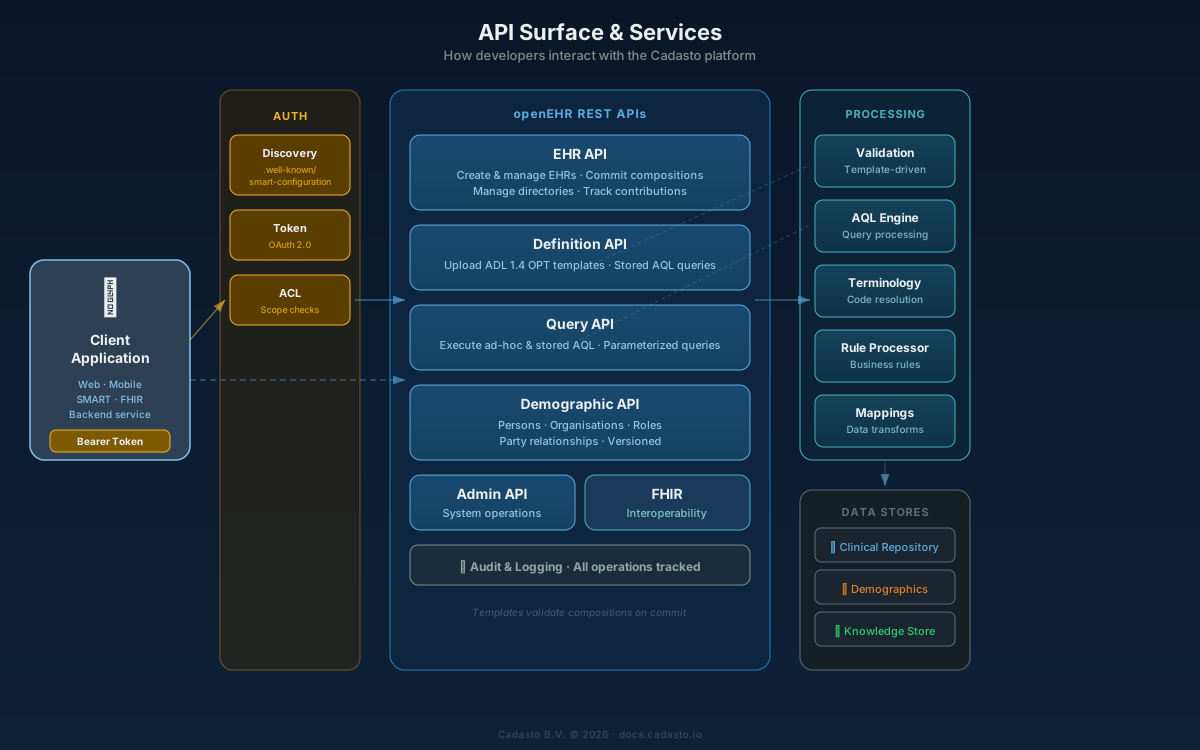
All clinical data is versioned and change-controlled — every modification creates a new version with an audit trail, so previous states can always be reconstructed.
Who this is for
These docs are for developers integrating with Cadasto — whether you're building a clinical application, connecting an existing system, or querying health data for analytics.
No prior openEHR experience is required. The openEHR Concepts guide covers the key ideas you need to get started.
Next steps
- Quick Start — Authenticate, create an EHR, upload a template, and commit your first composition.
- Authentication — Set up OAuth 2.0 and obtain an access token.
- openEHR Concepts — Understand archetypes, templates, compositions, and the two-level modelling approach.
- AQL Guide — Write queries to retrieve clinical data.
Get your own Cadasto environment
Contact us to set up a development or production environment with your own credentials. Request Environment